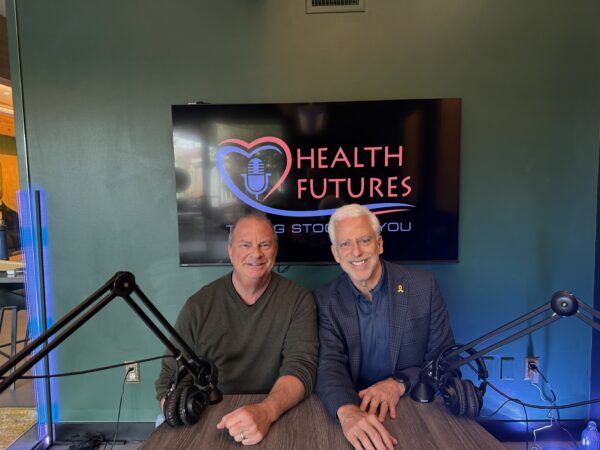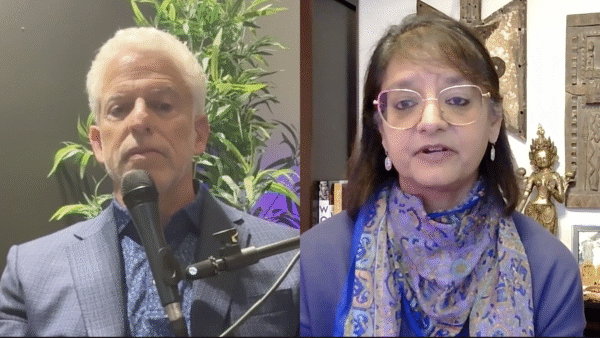
Our podcasted show continues as Health Futures moves deeper into its all-podcast era. In this episode, host Bob Roth sits down with public health leader, global health strategist, and longtime caregiver Paurvi Bhatt, founder and CEO of ThirdEyeFocus. Together they explore the deeply personal, cultural, and systemic forces shaping modern caregiving, and why the next decade demands a profound shift in how we support families.
🎧 For the full episode, CLICK HERE
An Immigration Story That Begins With Care
Bhatt begins her story in 1963, when her father came to the United States from India “in steerage on a cruise boat,” eventually traveling to Knoxville to pursue a master’s degree in manufacturing engineering, all before the Civil Rights Act. Two years later, her mother made the journey alone, flying across continents after a lifetime of never traveling without a chaperone.
They settled in Chicago. And caregiving entered their lives almost immediately.
When Bhatt was just three years old, her mother was diagnosed with cervical cancer. There were no grandparents, no extended family, no safety net. Her father, newly employed and living in an unfamiliar city, became a caregiver long before society recognized men in that role.
He took public transportation every day, dropping toddler Paurvi at an auntie-and-uncle’s home, visiting his wife in the hospital, then going to work, and retracing the path each evening.
“He was a male caregiver well before we even noticed what men were doing,” she said.
That early experience became the foundation for everything that followed.
A Career in Global Health — And a Life in Caregiving
Bhatt built a remarkable career across federal agencies, major nonprofits, pharma, medtech, retail, and corporate responsibility. She spent years in the HIV movement, advising on global infectious disease, health systems, and the economics of care.
Her work even brought her into HR at Levi’s, the first U.S. company to craft an HIV-inclusive health plan, helping shape benefits that remain industry standards today.
And yet, caregiving remained the quiet undercurrent of her life.
Her father developed early-onset dementia at 58, “the type Bruce Willis has,” she noted, just as her career was taking off. Her mother battled and survived multiple cancers before her final passing three years ago. Bhatt never saw herself as a caregiver, despite living with and caring for her mother for 13 straight years.
“I just didn’t notice,” she said. “I never identified as a caregiver.”
A Transformational Chapter: Leading the Rosalynn Carter Institute for Caregivers
One of the most pivotal experiences in Bhatt’s journey came when she stepped into leadership at the Rosalynn Carter Institute for Caregivers, where she served as Executive Director, Chief Executive Officer (interim and final), President, and Chief Impact Officer from 2020 to 2025.
It was during this time that Mrs. Carter’s famous quote reshaped how Bhatt understood her own life:
“There are only four kinds of people in the world: those who have been caregivers, those who are caregivers, those who will be caregivers, and those who will need caregivers.”
In one of their conversations, Mrs. Carter walked her through generations of care in her own family, the grandmother who cared for her mother, the mother who cared for her grandmother, and Bhatt herself leaving school and stepping in when her father’s dementia began.
“You see,” Mrs. Carter told her gently.
“That was the moment I realized caregiving passes from generation to generation,” Bhatt said. “This is who we are.”
Caregiving Is Now a Public Health Issue
Bhatt highlights an urgent reality: caregiving is no longer a private family matter, it is a public health emergency.
She referenced a 2024 CDC report showing:
13 out of 19 major health indicators are worse for caregivers than non-caregivers.
Caregiving now functions as a social determinant of health, supporting the care recipient while quietly harming the caregiver.
“We are in a pandemic of loneliness and disconnection,” Bhatt said.
“And caregivers are carrying the weight.”
She points out that the very thing that makes caregiving beautiful, intimacy, culture, community, is also what makes it invisible and unsupported.
Gen X Is the Next Frontier, And the Warning Signs Are Here
Bhatt places herself squarely at the leading edge of America’s next demographic wave.
“I’m a solo ager,” she said. “An only child who didn’t marry, doesn’t have children, doesn’t have siblings, and now doesn’t have parents. I’m the beginning of the next wave.”
Gen X, the latchkey generation, is moving toward older adulthood with:
fewer children
more distance between family members
more single households
more women without partners or siblings
more aging parents living longer with chronic illness
“We’re not the Golden Girls,” she said. “We are The Breakfast Club, fist in the air, and doing it differently.”
Policy, community support, and health systems, she warns, are not ready.
Why Caregiving Feels So Lonely — And How Communities Can Help
Bhatt and Roth explore the loneliness crisis affecting caregivers and care recipients alike.
Caregivers often won’t ask for help, especially elders from the Silent Generation who believe “in sickness and in health” means doing everything themselves.
Bhatt suggests a new rule:
Don’t ask caregivers what they need. Just do something.
“If someone keeps opting out of social gatherings, notice,” she said.
“If someone says they’re spending the weekend caring for Mom, bring groceries.”
“If someone has a dog, walk it.”
“Even if it’s the wrong help, it shows you care. And that starts the conversation.”
Holiday Red Flags: Sundowning, Confusion, Withdrawal
The episode was recorded in November, National Family Caregivers Month, just before the holidays, when families come together and caregiving needs become more visible.
Roth and Bhatt list signs families should watch for:
confusion as evening approaches
wandering
missed medications
hygiene decline
bruising
isolation
agitation
changes in personality
Sundowning, Roth noted, can be especially frightening, and caregivers often feel overwhelmed and alone.
Emergency Preparedness: An Overlooked Danger
Bhatt raised a point few consider: elders at home are vulnerable during wildfires, floods, blizzards, and power outages.
“We have stickers for pets on the window,” she said. “But nothing for elders on oxygen.”
Her mother lived alone during California fires, and Bhatt realized she hadn’t planned for emergencies that could take away electricity, air conditioning, heat, or mobility.
“This is a major gap,” she said. “And not something caregivers should have to solve alone.”
CMS GUIDE: A Start — But Not Enough
Roth highlighted the CMS GUIDE program, which for the first time recognizes family caregivers of those with dementia and offers limited respite support.
Both agreed:
it’s a meaningful beginning
the hours are not sufficient
cultural adaptation is essential
seven to eight years is too long to wait for results
“We cannot treat this with pharmacology,” Bhatt said. “We must treat it with community.”
Leadership, Mentorship, and the Next Generation of Care
As a mentor and leadership coach, Bhatt often tells emerging professionals what her mother once told her:
“You all work so hard to take care of the world.
But you don’t seem to take care of each other very well.”
Her advice is clear:
Ask for the benefits you need.
Don’t wall off your caregiving life from your work life.
Tell your story so others can see themselves in it.
Change systems from the inside, starting with your own employer.
Her One Big Question: What Would Truly Free Families to Be Families?
Bhatt closes the episode with a powerful challenge:
“What is the one innovation that would let the best of health care do its job, and let families simply be who they are to each other?”
She adds:
“If I choose to bathe my mother, I will.
But I’d rather eat with her, listen to her stories, and play cards with her.
Let the best of care take care of her, so I can be her daughter.”
📌 Learn More
Explore how Cypress supports families: CypressHomeCare.com or call (602) 755-9584
🎧 Listen to the full episode of Health Futures featuring Paurvi Bhatt: CLICK HERE
📝 This content is for educational purposes only and not medical advice.