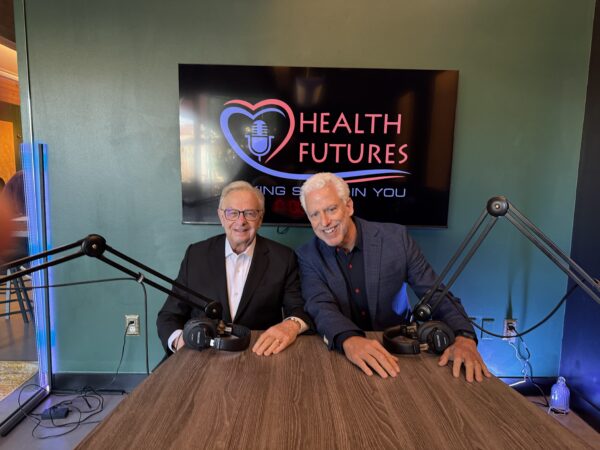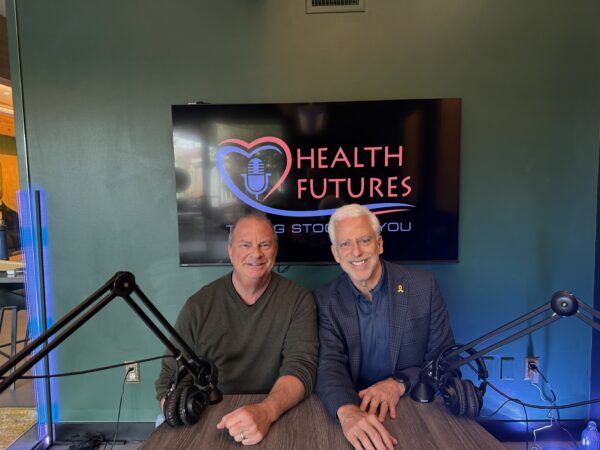
Health Futures: Taking Stock in You with Dr. Sommer Gunia and patient Amy Dox
Our podcasted show continues as Health Futures moves deeper into its all-podcast era. In this episode, host Bob Roth welcomes back Dr. Sommer Gunia, breast surgical oncologist with HonorHealth, for her third appearance on the program, along with a very special guest: Amy Dox, Dr. Gunia’s patient and Bob’s sister-in-law.
Together, they explore the fast-changing world of breast cancer treatment, the technologies transforming surgical care, and the human side of supporting women through one of the most vulnerable chapters of their lives.
🎧 For the full episode, CLICK HERE
Audacy | Apple | Spotify
A Journey That Led Back to Arizona and to Breast Surgical Oncology
Dr. Gunia grew up in a military family, spending early years in San Diego but returning often to Arizona, where her mother’s family lived. After studying at Arizona State University and completing medical training in Kansas City and Ohio, she returned home to begin her surgical career.
But she didn’t start with breast surgery in mind.
She originally imagined a future in anesthesia, until she realized she craved hands-on procedures and long-term patient relationships. General surgery captured her interest, but breast cancer care ultimately claimed her heart.
“You’re a general surgeon, but you get to build a relationship with these patients,” she explained.
“I help them at the most vulnerable part of their life… and I get to follow them in their story. It’s like building a family.”
How Breast Cancer Surgery Has Transformed
Breast cancer treatment is evolving at remarkable speed. Even since Dr. Gunia completed her fellowship, the landscape has changed dramatically.
Localization Without the Wires
Many women remember the old metal wires used to help surgeons locate tumors.
Today, those are rapidly becoming obsolete.
Dr. Gunia now uses:
radioactive seeds
radiofrequency markers
magnetic markers
These can be placed days before surgery, and sometimes remain indefinitely, eliminating the stressful, early-morning wire placement that patients once endured.
A Revolution in Lymph Node Surgery
Years ago, breast cancer patients often faced full axillary lymph node dissections, removing a dozen or more nodes and significantly increasing the risk of lymphedema.
Now, sentinel node biopsies allow surgeons to remove only an average of two nodes.
And at HonorHealth, Dr. Gunia performs the uncomfortable technetium-99 injection after the patient is asleep, sparing patients from one of the most dreaded pre-operative moments.
New Tools That Glow, Map, and Guide Surgeons in Real Time
As a self-described “hands-on techie,” Dr. Gunia is enthusiastic about the innovations reshaping her field.
Spy-Fi (ICG Mapping)
Using a fluorescent dye called indocyanine green, surgeons can now see lymphatic pathways under a special camera.
“The lymph nodes don’t just make noise anymore, they glow,” she said.
This technology has made her a more precise surgeon and is already being expanded into other surgical specialties.
Perimeter Optical Coherence Tomography
One of the most promising new tools allows her to examine surgical margins live in the operating room, using the same imaging principles found in retinal scans.
In a three-month lookback, Dr. Gunia performed 94 lumpectomies and only had to bring three patients back for additional surgery. Nationally, the re-excision rate averages around 25 percent.
“There’s nothing more heartbreaking than thinking we’re coming out cancer-free and then having to make that call,” she said. This technology is dramatically helping reduce those moments.
Staying Ahead of the Innovations
With new research emerging constantly, Dr. Gunia leans on:
national breast surgery conferences
multidisciplinary tumor boards
peer-reviewed publications
technology trials within the hospital system
Despite her love of innovation, she notes she is not a social-media-driven physician. For her, the work happens person-to-person, colleague-to-colleague, patient-to-patient.
A Patient’s Story: Navigating Breast Cancer With Trust and Connection
Alongside Dr. Gunia was Amy Dox, who shared her experience as a patient and member of Bob’s family. Their conversation brought humanity into the center of the episode, a reminder that while technology evolves, breast cancer treatment remains deeply personal.
The trust built between surgeon and patient, and the continuity of care through diagnosis, surgery, and recovery, are what make modern breast oncology so different from other areas of surgery.
“You’re building a family,” Dr. Gunia said, a statement Amy echoed in her own reflections.
A Look Toward the Future
As innovation accelerates, Dr. Gunia remains focused on what matters most:
safer procedures
greater precision
fewer reoperations
more comfort and dignity for patients
Technology may expand what is possible in the operating room, but compassion, communication, and continuity of care remain the foundation.
📌 Learn More
Explore how Cypress supports families at every stage of aging and care: CypressHomeCare.com or call (602) 755-9584
🎧 Listen to the full episode of Health Futures featuring Dr. Sommer Gunia and patient Amy Dox: CLICK HERE
📝 This content is for educational purposes only and not medical advice.