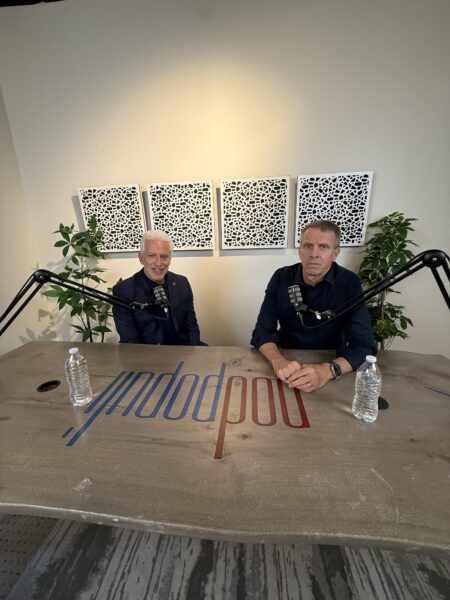
In a recent episode of Health Futures: Taking Stock in You, host Bob Roth welcomed Dr. Craig Norquist, chief medical information officer at HonorHealth, for an insightful conversation about artificial intelligence, healthcare innovation and the evolving relationship between technology and patient care.
With experience at the intersection of medicine and information technology, Norquist brings a valuable perspective to the opportunities and challenges facing healthcare organizations as they adopt new tools to improve patient outcomes, support medical professionals and create more personalized care experiences.
🎧 For the full episode, CLICK HERE
Audacy | Apple | Spotify
As hospitals and healthcare organizations increasingly explore artificial intelligence, questions remain about whether the technology can deliver meaningful improvements or whether expectations have outpaced its capabilities.
Norquist believes the opportunities are substantial, particularly as healthcare providers confront longstanding challenges involving access to care, administrative responsibilities and workforce pressures.
“I think it’s both, but I feel like it’s more transformational than hype,” Norquist said when Roth asked whether the growing attention surrounding AI reflects a genuine revolution in healthcare.
While acknowledging that artificial intelligence can produce inaccurate information and introduce new challenges, Norquist argued that the technology could help address problems that have frustrated patients and healthcare professionals for years.
One of the most immediate opportunities involves improving the experience of visiting a physician.
For patients, medical appointments often involve lengthy waits, extensive paperwork and limited time with a provider. Physicians, meanwhile, must balance patient interactions with documentation, electronic health records and insurance requirements that can consume substantial portions of their workdays.
Norquist pointed to ambient documentation technology, which uses artificial intelligence to capture and organize information from clinical conversations, as an example of innovation already making a difference.
“Let’s not have the doctor staring at a computer,” Norquist said, describing how AI-assisted documentation could allow physicians to maintain eye contact with patients instead of interrupting conversations to record notes.
HonorHealth introduced an ambient documentation system several months before the interview, and Norquist said the response from participating physicians has been striking.
He described hearing from doctors who said the technology had changed their professional and personal lives, including some who had considered leaving medicine because of the demands associated with their work.
For Roth, the potential to restore meaningful interactions between physicians and patients represents one of the most important benefits of artificial intelligence.
In an increasingly complex healthcare environment, he emphasized that technology should help providers focus on the individuals sitting in front of them rather than the administrative responsibilities competing for their attention.
The implications extend beyond convenience. Reducing the time physicians spend documenting visits could improve communication, support more productive appointments and potentially help address burnout among healthcare professionals.
Artificial intelligence also presents opportunities to improve patient safety by helping clinicians recognize patterns, identify risks and make more informed decisions.
Norquist’s background in nuclear power operations has influenced his approach to healthcare safety. He explained that principles such as redundancy, reliability and safeguards against human error are relevant to both industries.
In medicine, however, the challenge involves implementing protective systems without creating unnecessary obstacles for the people using them.
AI-powered tools may help physicians navigate complicated medical information, evaluate potential diagnoses and recognize when assumptions could influence clinical decisions. Norquist discussed the possibility of technology helping providers identify confirmation bias, which can occur when clinicians focus too heavily on evidence supporting an initial diagnosis.
Such tools could encourage physicians to consider alternative explanations before ordering additional tests or pursuing treatment.
Predictive analytics offers another opportunity to move healthcare toward earlier intervention.
By analyzing medical histories, laboratory results and other patient information, emerging technologies may help providers recognize potential concerns before they develop into more serious complications.
Rather than relying exclusively on treating patients after problems emerge, healthcare organizations could increasingly use information to anticipate needs and deliver more proactive care.
Norquist also identified insurance prior authorization as an area in need of significant reform.
The process, which requires healthcare providers to obtain insurer approval for certain medications, procedures and services, can delay treatment and create additional administrative work.
Norquist suggested that artificial intelligence could eventually help physicians understand insurance requirements earlier in the process, potentially reducing unnecessary denials and appeals.
His concerns about barriers to care are not exclusively professional.
During the conversation, Norquist shared his experience undergoing chemotherapy after being diagnosed with lymphoma in 2021. The experience gave him a firsthand understanding of the challenges patients face when navigating the healthcare system.
Despite being an established physician with professional connections, Norquist encountered insurance authorization delays during his own treatment.
He also recalled witnessing fellow patients struggling to obtain time away from work or resolve insurance problems while receiving chemotherapy.
The experience reinforced his determination to improve access to care for patients who do not have the same professional relationships or resources available to them.
Norquist also described helping a medical student with recurrent cervical cancer connect with a specialist after she had been told her treatment options were exhausted. She subsequently underwent surgery and continued her medical training.
For Norquist, the experience illustrated both the extraordinary possibilities of modern medicine and the difficulties patients can face when trying to access specialized treatment.
He believes technology could help reduce some of those barriers by improving coordination, connecting patients with appropriate resources and making the healthcare system easier to navigate.
That emphasis on access and coordination also has implications for the growing movement to bring more healthcare services into the home.
As the population ages, healthcare organizations and home care providers are exploring ways to use technology to identify changing needs, support caregivers and help older adults remain independent.
For Roth, whose work at Cypress HomeCare Solutions centers on helping older adults age safely and comfortably at home, those developments are closely connected to the broader effort to reimagine care.
Artificial intelligence and emerging monitoring technologies could help care teams recognize changes in daily routines, improve communication and respond more proactively when additional support is needed.
At the same time, Roth has emphasized that innovation should strengthen rather than replace the relationships at the center of caregiving.
A technology platform may help identify a potential concern or streamline an administrative responsibility, but it cannot replicate the trust, familiarity and emotional connection that develop between caregivers and the people they serve.
That distinction becomes especially important as artificial intelligence advances and healthcare organizations consider which responsibilities can be automated.
Norquist described his role in clinical informatics as helping healthcare professionals perform their jobs more effectively through technology.
“I help doctors do their job better. I help nurses do their job better by introducing tools to help them do that,” he said.
The conversation also explored how artificial intelligence could eventually give patients greater control over their own health.
Norquist envisions a future in which individuals have access to tools that help them better understand medical recommendations, evaluate treatment options and participate more confidently in conversations with their healthcare providers.
Rather than relying entirely on information delivered during a brief appointment, patients could use carefully designed technologies to become more informed participants in their care.
Asked to envision the role of artificial intelligence in healthcare a decade from now, Norquist predicted that the technology would become widespread and increasingly empower patients.
For Roth, that potential reinforces the importance of helping individuals take a more active role in their health and well-being.
The discussion ultimately returned to a central question facing healthcare leaders: How can technology improve efficiency and outcomes without sacrificing the human relationships that make care meaningful?
Norquist’s experiences as a physician, technology leader and patient underscore the importance of approaching innovation from multiple perspectives. Technology may help reduce medical errors, improve access and ease the administrative pressures facing healthcare professionals, but those improvements matter most when they translate into better experiences for patients.
Roth closed the conversation by emphasizing that the value of artificial intelligence should not be measured solely by its ability to automate tasks.
“I think you’ve reminded us of something incredibly important, and that is the most powerful technology in healthcare isn’t necessarily the technology that replaces what people do,” Roth said. “It’s the technology that allows people to do what only human beings can do better.”
As artificial intelligence continues to reshape medicine, the challenge will be ensuring that technological progress serves a larger purpose: creating a healthcare system that is not only more efficient and innovative, but also more accessible, compassionate and connected.
🎧 Listen to the full episode of Health Futures: Taking Stock in You to hear Bob Roth and Dr. Craig Norquist discuss artificial intelligence, patient safety, healthcare innovation and the importance of preserving human connection in the future of medicine.
📌 Learn more about Health Futures: Taking Stock in You
📌 Learn more about Cypress HomeCare Solutions
📌 Learn more about HonorHealth
📝 This content is for educational and informational purposes only.