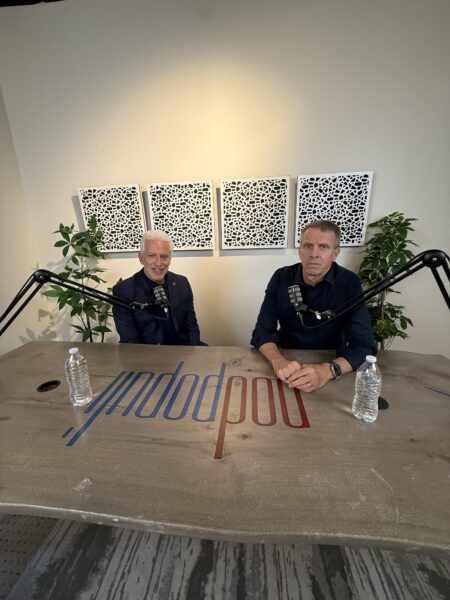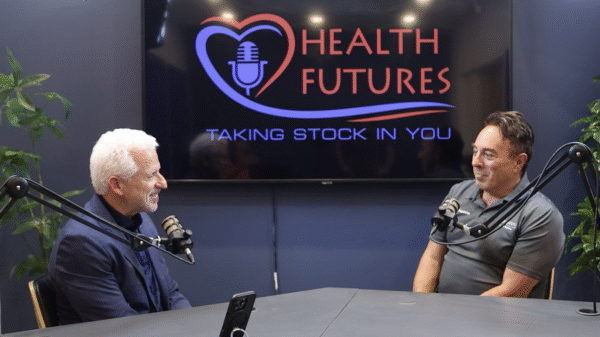
In a recent episode of Health Futures: Taking Stock in You, host Bob Roth welcomed Dr. David Carfagno, a sports medicine physician with HonorHealth, founder of Scottsdale Sports Medicine Institute and Team USA triathlete, for an insightful conversation about healthy aging, physical fitness and the importance of maintaining strength and independence throughout life.
Drawing on decades of experience treating professional athletes, endurance competitors and everyday patients, Carfagno shared his perspective on how exercise, nutrition and preventive care can help individuals remain active and improve their quality of life as they grow older.
🎧 For the full episode, CLICK HERE
Audacy | Apple | Spotify
As Americans live longer, conversations about longevity increasingly focus on a question that extends beyond the number of years a person lives: How can individuals maintain the physical abilities, independence and quality of life that make those additional years meaningful?
For Roth, co-founder and managing partner of Cypress HomeCare Solutions, the distinction between living longer and living better is particularly relevant to his work helping older adults age safely and comfortably in their homes.
“We spend a lot of time talking about how do we live longer, but perhaps the more important question is how do we live better?” Roth said. “How do we preserve our strength, maintain our independence, challenge ourselves physically and mentally, and continue doing the things that bring meaning and purpose to life?”
Carfagno believes that while certain physiological changes accompany aging, individuals have considerable opportunities to influence their health through physical activity, strength training and lifestyle choices.
His philosophy, which he calls “treat and compete,” reflects his unusual experience as both a physician treating athletes and an athlete competing alongside them.
Throughout his career, Carfagno has worked with professional sports organizations, served as medical director for Ironman Arizona and provided medical support for endurance events across North America. He has also competed in five triathlon world championships.
Those experiences have shaped his approach to patient care, allowing him to better understand the physical and emotional challenges associated with training, injury, recovery and competition.
“I’ve gone through. I go through what they’re going through,” Carfagno said, explaining how his own experiences have helped him develop greater empathy for patients.
He recalled his own experience undergoing multiple orthopedic surgeries, noting that understanding the patient perspective has helped him build trust and develop more effective treatment plans.
For Carfagno, that perspective extends well beyond competitive sports.
He believes everyone is an athlete in some capacity, whether preparing for a triathlon or simply maintaining the strength and mobility necessary to perform everyday activities.
“Everybody’s an athlete, whether you played checkers or hopscotch 50 years ago,” Carfagno said.
Roth agreed, emphasizing that the physical demands of everyday living should not be overlooked.
“Life is a sport. You got. Bend and twist and do all those things,” Roth said.
The conversation then turned to the distinction between lifespan, health span and what Carfagno calls performance span.
While lifespan measures how long someone lives, health span focuses on the years spent in relatively good health. Performance span takes that concept further by considering how long individuals can continue performing the physical activities that matter to them.
For older adults, that might mean walking independently, climbing stairs, carrying groceries, traveling or enjoying recreational activities without significant physical limitations.
Maintaining those abilities becomes increasingly important as the body undergoes changes associated with aging.
Carfagno explained that several physiological measures, including muscle mass, aerobic capacity and strength, begin declining relatively early in adulthood, with losses becoming more pronounced later in life.
One of the most important concerns is sarcopenia, the age-related loss of muscle mass and strength.
Although many people associate aging with weaker muscles, Carfagno emphasized that muscle loss is not simply a cosmetic concern.
Declining muscle strength can affect balance, mobility, recovery from illness and the ability to perform everyday activities independently.
For older adults, those changes can have significant implications for whether they can continue living safely at home or eventually require additional assistance.
Carfagno explained that the consequences of declining physical function often become particularly apparent when older patients are hospitalized or preparing for surgery.
“It’s really about independent living, right? Are you able to sustain that?” Carfagno said.
Roth, whose work in home care frequently involves supporting individuals experiencing these challenges, emphasized the importance of preparing for physical decline before it threatens independence.
He noted that individuals who have the opportunity to improve their physical condition before surgery may be better positioned for recovery.
The conversation also explored how prolonged inactivity, particularly during hospitalization or recovery from surgery, can accelerate deconditioning.
Carfagno described the importance of preparing patients physically before medical procedures and continuing rehabilitation afterward.
Rather than viewing rehabilitation as a temporary process that ends when someone recovers from an injury, he advocates a continuum that includes rehabilitation, post-rehabilitation and ongoing fitness.
That approach reflects a broader philosophy of treating exercise as an essential component of preventive healthcare.
Roth asked whether individuals who have spent decades without exercising can meaningfully improve their physical condition in their 60s, 70s or even 80s.
“Absolutely,” Carfagno responded.
He explained that older adults can benefit from resistance training, including exercises performed at home using body weight, resistance bands and other accessible equipment.
“You don’t have to do much and go to a brick and mortar gym as we used to always do,” Carfagno said, emphasizing the opportunities for exercising at home.
The key is developing an appropriate program that challenges the body while accounting for existing medical conditions, physical limitations and individual goals.
Carfagno also emphasized that walking, while beneficial, may not provide all the physical challenges necessary to preserve strength, balance and cardiovascular fitness.
An effective exercise program should incorporate several components, including aerobic activity, resistance training, flexibility, balance and reaction time.
He referenced recommendations calling for approximately 150 minutes of moderate physical activity each week, along with strength training on at least two days.
However, he stressed that exercise plans should be tailored to each individual’s circumstances rather than approached as a one-size-fits-all prescription.
For someone who has been largely sedentary, meaningful progress may begin with simple movements performed consistently at home.
Those improvements can translate into greater confidence, better physical function and an increased ability to manage everyday responsibilities.
Carfagno emphasized that exercise should be viewed as a long-term investment in health, not simply a response to injury or illness.
“Exercise is medicine, right?” he said.
The discussion also examined the growing role of technology in evaluating physical fitness and guiding exercise programs.
Carfagno highlighted VO2 max, a measure of the body’s ability to use oxygen during physical activity, as an important indicator of cardiovascular fitness.
Although VO2 max naturally tends to decline with age, he explained that appropriately structured aerobic exercise can help individuals improve their cardiovascular capacity.
Through his Athlete for Life program, Carfagno uses assessments that can include body composition testing, metabolic evaluations and measures of physical performance to help patients understand their current fitness levels.
The information allows him and his team to develop individualized programs based on measurable goals.
He also discussed the growing popularity of wearable fitness devices, which can help individuals monitor activity, recovery and other health-related metrics.
However, he cautioned that estimates generated by smartwatches should not necessarily be treated as equivalent to formal clinical testing.
For Carfagno, the value of these technologies lies in helping individuals better understand their bodies and make informed decisions about their health.
Nutrition represents another important component of maintaining physical function with age.
During the conversation, Roth asked about the role of protein in preserving muscle mass and supporting recovery after exercise.
Carfagno explained that protein is essential for muscle repair and growth, particularly for individuals participating in resistance training.
He emphasized obtaining nutrients primarily through whole foods, including fish, poultry, dairy products and other protein-rich foods, rather than relying exclusively on supplements.
“I think you got to get Whole Foods, number one,” Carfagno said, recommending an anti-inflammatory Mediterranean-style diet.
While protein bars and supplements can help individuals meet nutritional needs, Carfagno cautioned that some products contain added sugars and other ingredients that may not support broader health goals.
He also acknowledged that individuals with certain medical conditions, including kidney disease, may require specialized guidance before increasing protein intake or using supplements such as creatine.
The broader message was that nutrition and physical activity should work together as part of a comprehensive approach to healthy aging.
Beyond exercise and nutrition, Carfagno discussed the importance of recovery, breathing and mental preparation.
Drawing on his experiences in endurance sports, he described how controlled breathing techniques can help athletes manage anxiety and maintain focus during physically demanding situations.
Those same principles can be applied to everyday life, including stress management and sleep.
Roth shared his own experience using breathing exercises to relax before bed, noting how focusing on his breathing has helped him fall asleep.
The conversation also highlighted the psychological benefits of setting goals and overcoming challenges.
Carfagno recalled his first triathlon, when he became overwhelmed during an open-water swim and needed assistance.
Rather than abandoning the sport permanently, he eventually returned to competition after working to become more comfortable swimming in open water.
He explained that the lessons learned through sports can translate into other aspects of life.
“That’s the beautiful thing about sports is that you develop a goal, you overcome it, achieve it, and you apply it to any other area of life,” Carfagno said.
Those lessons, he suggested, extend to professional responsibilities, personal relationships and the challenges people encounter as they age.
For Roth, the discussion reinforced the importance of taking a proactive approach to health rather than waiting until physical limitations become difficult to manage.
That philosophy closely aligns with the work of Cypress HomeCare Solutions, where maintaining independence and quality of life are central to supporting older adults and their families.
While home care services can provide valuable assistance when individuals experience changes in mobility, strength or daily functioning, preventive measures may help older adults preserve those abilities for longer.
Roth also emphasized that healthy aging involves more than physical fitness.
Social engagement, meaningful relationships and participation in community activities play important roles in overall well-being.
He expressed concern about older adults experiencing social isolation, particularly those aging without consistent support from family or friends.
“You need to get off the couch. You need to have interpersonal skills and and and join clubs and be with people,” Roth said.
The conversation underscored the importance of remaining connected to others while continuing to challenge oneself physically and mentally.
As the discussion turned toward legacy and personal fulfillment, Roth asked Carfagno how he hoped to be remembered and what winning at the game of life ultimately meant to him.
Carfagno spoke about the importance of mentoring younger physicians, sharing knowledge and making a positive difference in the lives of others.
He credited the mentors who influenced his own medical career and expressed a desire to extend that same encouragement to future generations.
His answer also returned to one of the most important qualities he believes a physician can offer a patient: hope.
“The strongest thing I think we have is hope,” Carfagno said. “You can give anybody hope.”
For him, helping someone develop a plan, recognize opportunities for improvement and believe that progress is possible represents a meaningful form of success.
As the episode drew to a close, Carfagno challenged listeners to consider what they could begin doing immediately to improve their health.
His suggestions did not require expensive equipment or dramatic lifestyle changes.
Even something as simple as performing additional sit-to-stand movements when getting out of a chair could represent a starting point for becoming more active.
“Keep moving, exercising because we want you around longer,” Carfagno said.
Roth echoed that message, emphasizing the importance of focusing on the aspects of aging individuals can influence.
“I don’t want to play defense. I want to play offense,” Roth said.
The conversation ultimately reinforced a message that applies to people of all ages: Healthy aging is not simply about extending life expectancy, but about preserving the strength, independence, relationships and sense of purpose that make life meaningful.
While no one can stop the aging process, individuals can take meaningful steps to prepare their bodies and minds for the years ahead.
And whether someone is training for a world championship or simply hoping to continue living independently at home, the goal remains the same: to stay in the game of life for as long as possible.
🎧 Listen to the full episode of Health Futures: Taking Stock in You to hear Bob Roth and Dr. David Carfagno discuss healthy aging, muscle preservation, cardiovascular fitness, nutrition and the importance of staying active and independent throughout life.
📌 Learn more about Health Futures: Taking Stock in You
📌 Learn more about Cypress HomeCare Solutions
📌 Learn more about HonorHealth
📝 This content is for educational and informational purposes only.