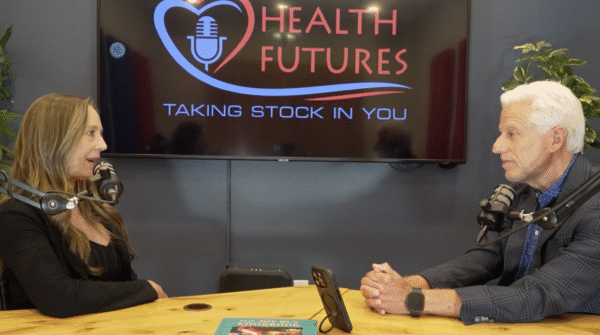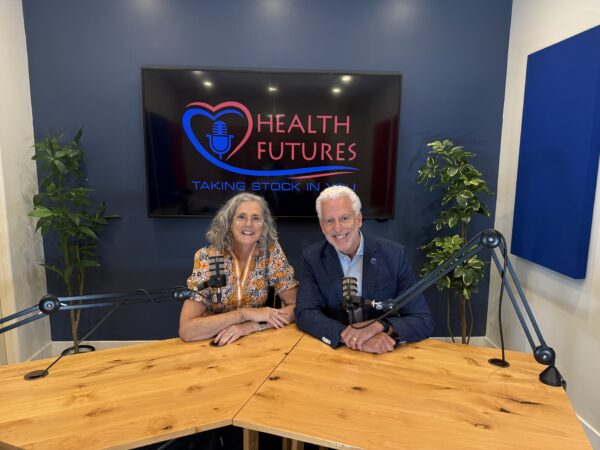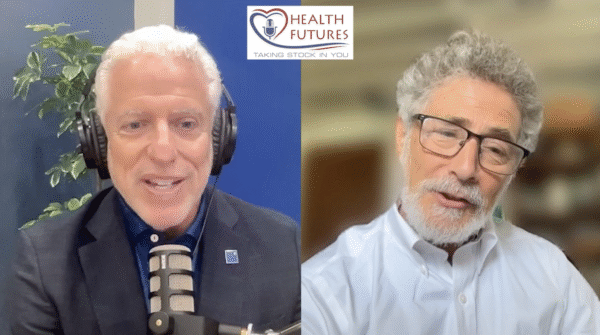
In a recent episode of Health Futures: Taking Stock in You, host Bob Roth welcomed Louis Tenenbaum, president and CEO of HomesRenewed Ventures, back to the show nearly 10 years after his first appearance for a conversation about aging in place, fall prevention and what it will take to build homes that can support Americans throughout a 100-year life.
🎧 For the full episode, CLICK HERE
Audacy | Apple | Spotify
Tenenbaum has spent decades thinking about a question that is becoming increasingly important as Americans live longer: If most people want to remain in their homes as they age, why aren’t those homes designed to support them?
His path into aging in place began long before the term became widely used. After college, Tenenbaum went into construction, first building solar homes in Ann Arbor, Michigan, before moving to Washington, D.C., and becoming a remodeling contractor. In 1988, he worked with the family of a 12-year-old boy who had been shot and left paraplegic. The boy’s mother wanted her son to be able to return home without sacrificing his independence, particularly in private spaces such as the bathroom.
That project changed the direction of Tenenbaum’s career. He began focusing on how the physical design of a home could allow people with disabilities and, eventually, older adults to live more independently.
Decades later, Tenenbaum believes the challenge is no longer simply figuring out how to modify a home after someone’s health changes. The bigger opportunity is preparing homes before a crisis happens.
That shift from reacting to problems to preventing them became a central theme of his conversation with Roth.
One of the clearest examples is fall prevention. Tenenbaum said one of the most dangerous places in the home is the transition into and out of a bathtub or shower. Wet surfaces, changes in balance and the need to lift a leg over a tub can turn an everyday activity into a serious risk.
Something as straightforward as putting a grab bar in the right location, he argued, can make an enormous difference.
“If we can get grab bars in every home there and a mat, we will save a lot of falls, which will save a lot of dreams, but also save a lot of money,” Tenenbaum said.
For Tenenbaum, the goal is to stop thinking of features such as grab bars, wider doorways, better lighting, no-step entrances and safer bathrooms as accommodations reserved for older or frail people. Instead, they can simply be considered good home design.
That philosophy is particularly important because the vast majority of homes people will live in as they age have already been built. When Roth asked whether new construction or retrofitting existing homes presented the bigger opportunity, Tenenbaum’s answer was clear.
“Retrofit because we already have 100 million homes we’re living in,” he said.
The bathroom is an especially important place to start. Tenenbaum recommends thinking about how someone enters and exits a shower or tub, whether there are secure places to hold onto, whether lighting is adequate and whether there is enough room for a caregiver to safely assist another person.
But the conversation went well beyond bathrooms.
Stairways should have functional railings. Paths through the home should be well lit and easy to navigate. Doorways should accommodate changing mobility needs. Kitchens can be designed so frequently used items are easier to reach and tasks can be performed while sitting when necessary.
The objective is not simply to make a home accessible. It is to allow the home to continue supporting the life a person actually wants to live.
Tenenbaum described how seemingly small design decisions can eventually affect independence, socialization and quality of life. Someone who cannot safely navigate a bathroom may become afraid to shower. Someone who struggles to get through the home may conserve energy by giving up activities they once enjoyed. And someone who cannot easily leave the house may become increasingly isolated.
That is why Tenenbaum believes aging-in-place design must be personal. For one person, access to a garden may be essential. For another, it may be cooking, reading, listening to music or entertaining friends. The best home design preserves not only safety but also the routines and activities that give a person’s life meaning.
Technology is increasingly becoming part of that equation as well.
Roth and Tenenbaum discussed how environmental controls, monitoring systems and other technologies can help older adults remain more independent while also giving families and caregivers additional tools to identify changes and provide support.
But technology alone cannot solve the challenges created by an aging population.
More Americans are expected to age in their own homes, and Tenenbaum argued that the healthcare and caregiving systems surrounding those homes will also have to change. Rather than forcing families to piece together services on their own, he envisions a more coordinated model in which care management, healthcare providers, technology, home modifications and other resources work together.
He described that next evolution as “aging in place 3.0.”
“More people are going to age in their homes,” Tenenbaum said, pointing to affordability, personal preference and limited alternatives as reasons the home is increasingly becoming the default setting for aging.
Roth agreed, noting that more healthcare services can already be delivered where people live, from physicians and nurses to diagnostic testing and other forms of care.
The challenge, they said, is creating a system around the home that can respond as seamlessly as more traditional healthcare settings do when a person’s needs change.
The conversation also turned to who should pay for making homes safer.
Tenenbaum believes homeowners, insurers and government all have a role to play. Falls and other preventable injuries do not only affect individuals and their families. They also generate significant costs for insurers and the healthcare system, creating a financial incentive to invest in prevention before an injury occurs.
“It should be a share care, share pay,” Tenenbaum said. “There should be a good way that everyone pays their share, so they have a stake in the game.”
That same philosophy extends to public policy. Tenenbaum has spent years advocating for policies that would encourage homeowners to make safety and accessibility improvements before they become urgently necessary.
Ultimately, he wants prevention to become the norm rather than the exception.
When Roth asked what Tenenbaum hoped to accomplish over the next decade, his answer came back to one of the simplest modifications they had discussed throughout the episode: the grab bar.
“Basic safety in people’s homes is a critical thing that I think we can accomplish over a 10-year period,” Tenenbaum said.
His goal is for that basic level of safety to become standard in every home, “regardless of age, regardless of health, or regardless of finance.”
For Roth and Tenenbaum, the broader conversation is ultimately about more than remodeling.
Americans are living longer. Healthcare is increasingly moving into the home. Yet millions of people are living in houses that were designed for a very different reality.
Preparing those homes for longevity can help people maintain their independence, reduce the burden on caregivers and allow more older adults to remain connected to the lives and communities they have built.
Tenenbaum closed the conversation with a simple message about approaching those decisions intentionally.
“Respect yourself and respect others, and expect respect for your choices,” Tenenbaum said. “And then take steps in respect for your choices.”
🎧 Listen to the full episode of Health Futures: Taking Stock in You to hear Bob Roth and Louis Tenenbaum discuss aging in place, fall prevention, home modifications, accessible design, technology, caregiving and how homes can be better prepared for a 100-year life.
📌 Learn more about Health Futures: Taking Stock in You
📌 Learn more about Cypress HomeCare Solutions
📌 Learn more about HomesRenewed Ventures
📝 This content is for educational and informational purposes only.