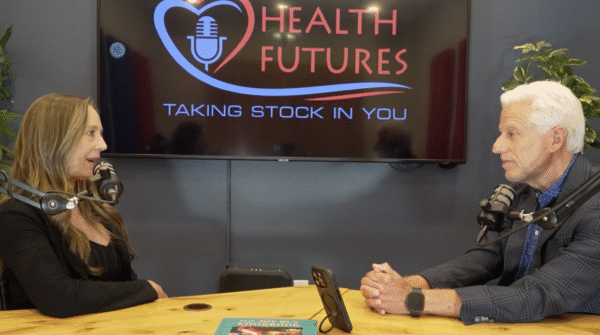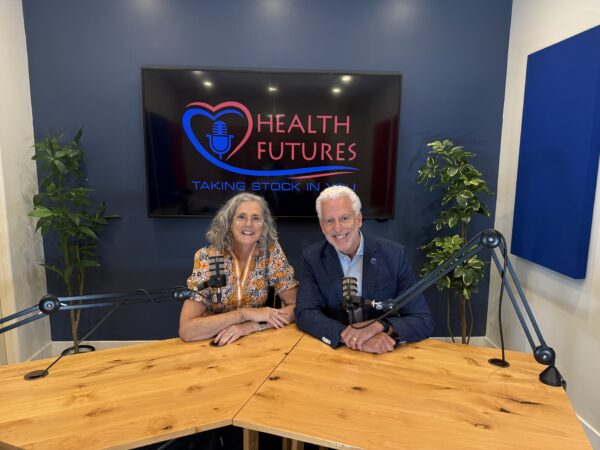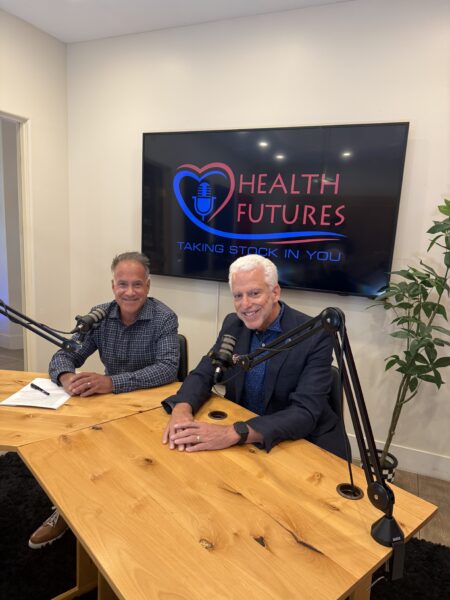
In a recent episode of Health Futures: Taking Stock in You, host Bob Roth welcomed back healthcare strategist John Marchica, CEO of Darwin Research Group and host of the Healthcare Rounds podcast, for a wide-ranging conversation on how healthcare has evolved over the past decade and where it’s headed next.
🎧 For the full episode, CLICK HERE
Audacy | Apple | Spotify
Ten years after his first appearance on Health Futures, Marchica reflected on the predictions he made about healthcare and examined which trends materialized, which fell short, and what challenges still lie ahead.
“There was this thing called COVID,” Marchica joked. “It interrupted things.”
The discussion explored how the healthcare industry has changed since 2016, from the rise of value-based care and healthcare consolidation to advances in artificial intelligence, home-based care, and consumer expectations. While Marchica acknowledged progress in several areas, he argued many of healthcare’s biggest promises remain unfulfilled.
“I think the promise has not been fulfilled whatsoever,” he said of value-based care. “The benefits have been pretty incremental.”
Throughout the conversation, Roth and Marchica examined why healthcare costs continue to rise despite technological advances and new payment models, and why improving quality while reducing costs remains one of the industry’s greatest challenges.
Artificial intelligence emerged as one of the episode’s central themes. Marchica said AI has enormous potential to streamline administrative work, improve documentation, and help healthcare providers focus more on patient relationships rather than paperwork.
“My hope is, can AI reduce all the other clutter to make room for more of that personal interaction,” he said.
Roth agreed, emphasizing that healthcare, particularly home care, is built on relationships rather than transactions.
“It’s relational. It’s not transactional,” Roth said.
The conversation also focused on the future of home-based care as America’s population ages. Roth discussed the growing shortage of caregivers and why technology, predictive analytics, and family caregivers will all play increasingly important roles in helping older adults remain safely at home.
Marchica echoed that vision, arguing healthcare organizations must do a better job connecting providers across the continuum of care and using technology to create a more coordinated patient experience.
“Regardless of who is caring for that patient… that person feels like they’re being cared for by one system,” he said.
The episode also tackled healthcare financing, rising pharmaceutical costs, value-based care, accountable care organizations, and the role employers, insurers, and patients all play in improving health outcomes.
Looking ahead, Roth challenged Marchica to imagine what healthcare might look like in 2036. Marchica said his hope is that every American will have access to healthcare and that significant progress will be made against diseases like Alzheimer’s, cancer, and cardiovascular disease.
“I hope that the access problem… is gone,” he said.
The discussion concluded with reflections on leadership, innovation, and decision-making. Drawing on years of interviewing healthcare executives and advising organizations across the country, Marchica said the best leaders combine data with experience, empathy, and a strong sense of purpose.
“I think the best leaders… have some sort of moral compass,” he said.
🎧 Listen to the full episode of Health Futures: Taking Stock in You to hear Bob Roth and John Marchica discuss the future of healthcare, artificial intelligence, home-based care, leadership, value-based care, and the innovations shaping the next decade.
📌 Learn more about Health Futures: Taking Stock in You
📌 Learn more about Cypress HomeCare Solutions
📌 Learn more about Darwin Research Group
📝 This content is for educational and informational purposes only and should not be considered medical, legal, or financial advice.